BOER GOATS
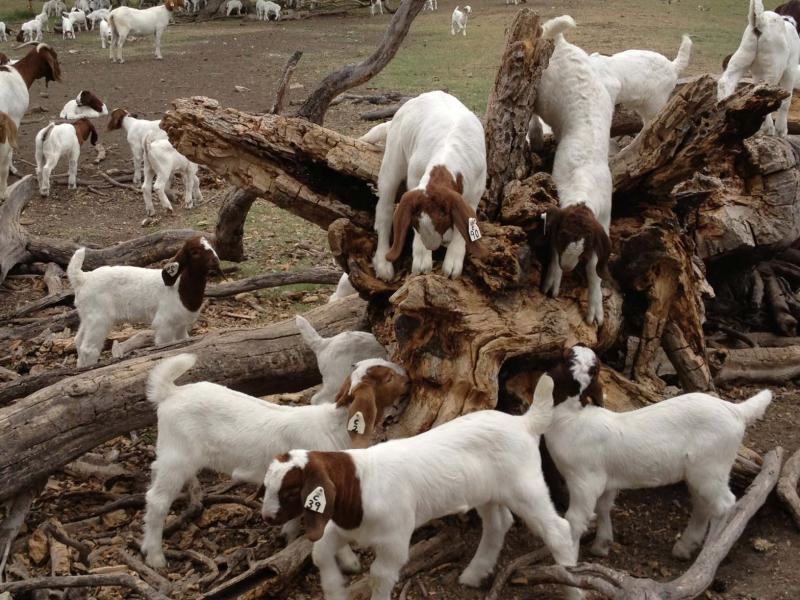
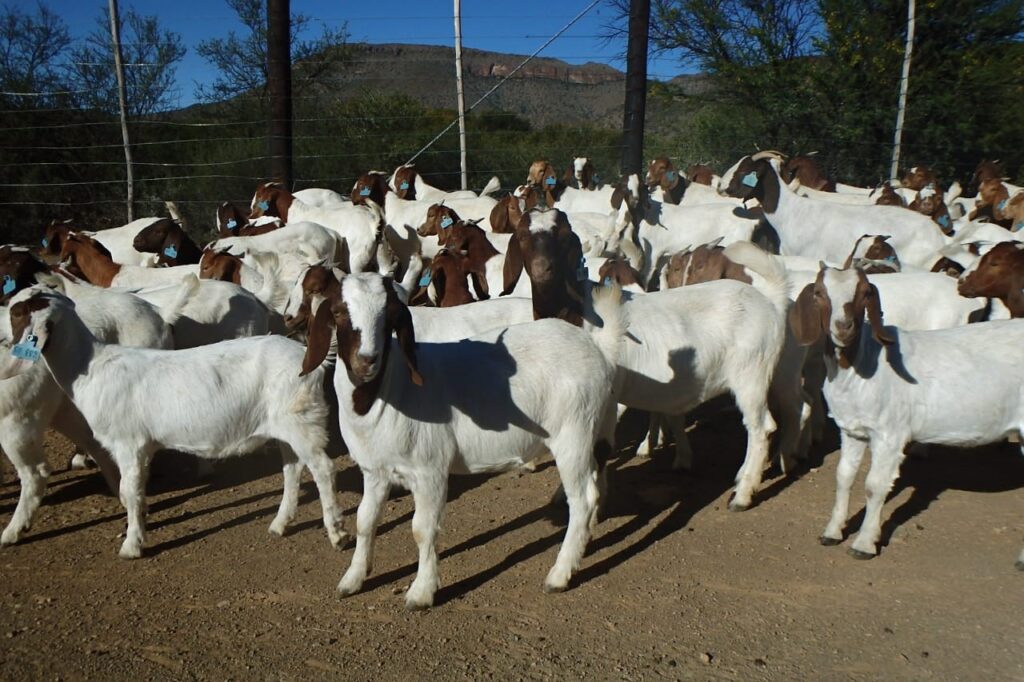
If you want to raise goats for meat, you can’t go wrong with the popular Boer.
If you’re looking for an economical meat animal or are interested in making a little extra money, consider raising Boer goats. Originally bred in South Africa, Boers are now one of the principal meat goat breeds in the World. And for a good reason.
“They’re thicker and have more length from the thirteenth rib to the hip bone. They’re deeper and fuller in the leg. “They’re carrying a lot of red meat.”
Mature males or bucks typically weigh in at 90 to 135 kg, while females or does level out at 55 to 90 kg. Despite their substantial muscle, Boers tend to be gentle. “Once in a while, you’ll have an ornery one, but you can get a halter on a 135kg buck, and he’ll walk right along with you. As with all livestock, you want to be careful.
Preparations
If you are considering purchasing a few Boer goats, there are some things that need to be addressed. First, you will need a fenced pasture capable of handling them. We recommends a 4-foot-high, high-tensile, electrified fence. We warn that the goats are clever enough to find any weakness in your fence and will escape if they find one.
“You want an animal that walks straight on its legs, stands straight, and has some thickness to it.
Feed and care
Once you get your Boers home, you have a few decisions to make about how you want to feed them. Some owners choose to feed hay and grain in addition to pasturing their goats; others just let them have the run of the land. You can keep your pastures well fertilized and supplements the goats with grain, when needed.
Providing a decent shelter, particularly if you live in a colder climate, will help keep your goats in shape. While it’s not impossible to keep your herd outdoors all the time in warmer climates, we recommend it.
You should also provide your animals with abundant fresh water, mineral supplements, and vaccines where necessary. While Boers are known for their hardiness and resistance to disease, “You have to be careful. Quick pneumonia or heat exhaustion can cause you to lose an animal. You just never really know when it comes to livestock.
KALAHARI RED GOATS
Magnificent Kalahari Red Goats- Bucks & Does.
Interest in the Kalahari Red breed is worldwide. The hardiness of the breed, its excellent walking ability and good mothering attributes make it ideally suited to the harsh conditions predominant in large parts of South Africa. Does & Bucks use their sharp horns to protect their young.
Kalahari Reds does have excellent mothering abilities, and they can kid right in the paddock and can raise their offspring there. No assistance is needed to assist does to find their young. In South Africa natural selection is made strongly in favor of these attributes because offspring that are properly cared for by their mothers will do likewise for their own progeny. Through natural selection processes, only the fittest Kalahari Reds mothers have survived.
The Kalahari Reds does are fertile and produce plenty of milk, and as a result, the offspring grow fast. Kalahari Reds Breeders select for twins that are usually of equal strength. Generally, newborn offspring are strong and have a strong urge to suck. They herd well, and animals flock together. They breed all year round, and will drop three times every two years.
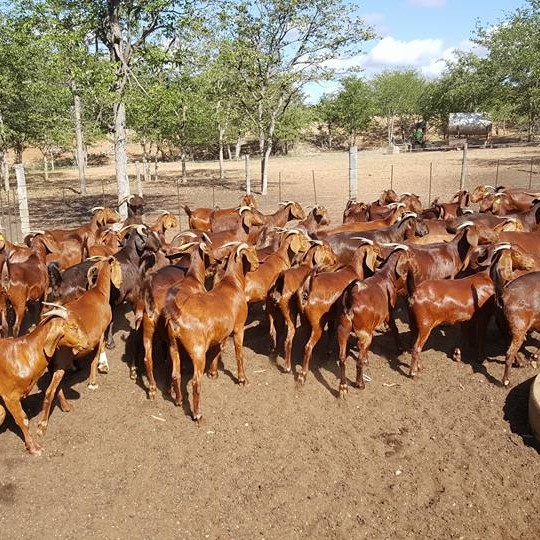
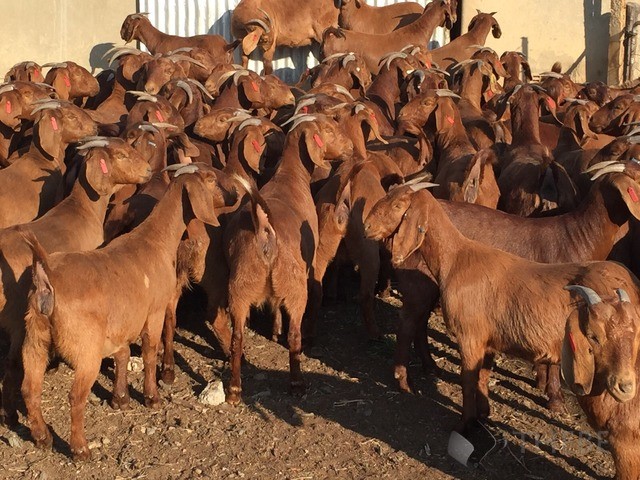
Kalahari Reds can be used to give South African goats a uniform, solid red colour, with all the unique advantages that this brings. Their earthy colour provides a good camouflage that protects them from predators. White kids would be seen easily by foxes, pigs and eagles. They are fully pigmented, and therefore able to endure heat and strong sunshine. Their dark coats and long ears provide good heat resistance, and will feed for longer during the heat of the day, which ultimately means higher weight gains.
With their earthy colour, good mothering abilities and excellent mobility, the Kalahari Red is drawing widespread interest from breeders both locally and abroad. Kalahari Reds are less susceptible to diseases and need to be inoculated and dosed far less than other breeds. All of these easy-care qualities make the Kalahari Red a popular choice in areas where farming is less labour intensive.